
Who Am I Becoming?
A storyteller who encounters both people, and art with empathy, curiosity, and childlike wonder.
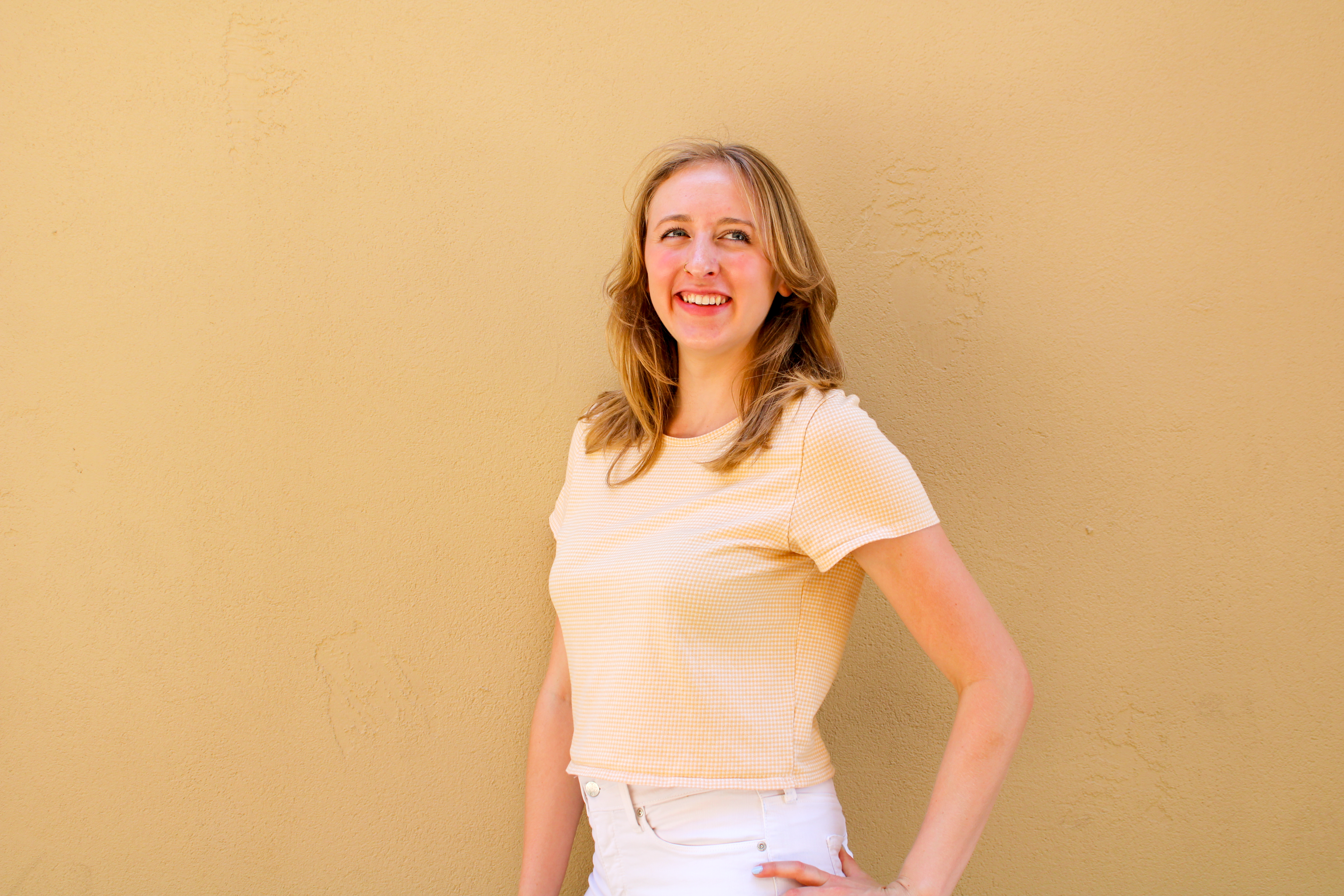
“You drip golden honey joy.” Sitting at a round table in our Writing Studio, another consultant who had just finished observing one of my sessions, kindly spoke these words of life over me. In the Writing Studio, I have been surrounded by people who live on a mission for Christ. I am deeply loved, and have been chosen to do the important work of loving people well. Whether it be in a consultation, the grocery store, or my future profession, I strive to be a person who “drips golden honey joy.” Through my first year at the Writing Studio, I am becoming a storyteller who encounters both people and art with empathy, curiosity, and childlike wonder.
At the WCA SoCal conference 2025, keynote speaker Dr. Paul Minifee spoke on creating a “praxis of pathos” encouraging students to incorporate empathy in their consultations. Dr Minifee’s speech was profoundly influential to my own rhetoric in consulting. While consultants are not required to utilize empathy in sessions, we are called to care for the person in front of us. Dr Minifee excellently phrased it, reminding consultants to offer “doses of empathy among prescriptions of punctuation.” As consultants we play a critical role in fostering the emotions of others; we want to be emotionally intelligent as we engage in honest emotional labor. Through recognizing and valuing others emotions, we grow in empathy. Empathy is the fuel that allows me to value the person over the product. Engaging with others empathetically seeps into all areas of my life, acting, teaching, writing, evangelizing, and consulting. Whatever career field I end up in, empathy is my tool to encourage positive work environments, kind collaboration, and respect for authority. By intentionally fostering a praxis of pathos now, I am becoming further equipped for my profession, and my ability to love others well.
Similar to empathy, which values the emotional well being of others, curiosity creates space to learn intellectually about others. Curiosity is a beautiful posture of humility which assumes that one person has something to learn from another. I strive to be holistically curious. By asking questions in every regard (emotional well being, history, culture, education, opinions, religious perspectives) I intentionally love and care for the person in front of me. Steve Sherwood, in his article “Portrait of the Tutor as Artist: Lessons No One Can Teach,” suggests that a creative background is the best preparation for creative questioning in the Writing Studio. As an actor, I have received training in improv, and team collaboration exercises which Sherwood suggests is the most effective tool for training consultants. My creative experiences have prepared me for effective consulting, where I must efficiently analyze a paper, diagnose problems, then determine what course of action is most helpful for the writer. Then, keeping this knowledge close to my chest, I create and ask questions that help writers identify and solve their own obstacles. Being endlessly curious helps writers to identify their own opinions, articulate their perspective, so they can clearly communicate to their audience. I understand people’s stories more by asking them questions, and I articulate my own stories as I challenge them with question after question. In my future career, my curiosity will help me to be a clearer communicator, and produce excellent work. Humble curiosity prepares me to love others well in my professional and personal life.
Since high school, I have sought to live with childlike wonder. Upon graduation, I followed the coveted social norm of decorating grad caps, and felt particularly led to decorate mine with my mission. I want to be a person who carries childlike wonder through my adult eyes. The fictional character who best embodies this childlike wonder is Winnie The Pooh. This willy nilly silly old bear sees the world simply, yet cherishes and questions the unknown. On my grad cap I drew Pooh and his friends, and quoted A.A. Milne from A House on Pooh Corner, where he remarks “even though he had a very small heart, it could hold a rather large amount of gratitude.” Pooh can live with childlike wonder because his small heart holds a lot of gratitude. Living from a well of gratitude results in my own ability to care for others better. In the Writing Studio, I am able to care for and push the person in front of me because I am grateful for whose and who they are. By seeing the world through young eyes, I become more open minded and encourage others to be their best selves. In considering every aspect of a person or story, I become more intellectually, and emotionally aware. Operating from a heart grounded in gratitude provides me the chance to cherish people and my profession. These qualities of childlike wonder transform me into a kind, effective, and interpersonal leader.
It seems strange to say that I “work” at the Writing Studio. As I am surrounded by people who dread their jobs, and sulk off to their shifts, I feel that surely I should not be getting paid to be doing the rewarding work I do! From a personal perspective, working in the Writing Studio has given me the opportunity to interact with the diverse range of people at Concordia, learning more about other cultures, journeys, and personalities. Academically, my knowledge has been broadened by reading interdisciplinary papers, edifying my liberal arts education. Professionally, I have joined the academic discourse for practices of how to best support and serve students. As an aspiring teacher these conversations are invaluable to my teaching style and approach. From a literary perspective, I have honed my own writing process, to write more effectively, with greater clarity. Through working at the Writing Studio I have been blessed to receive skills that are preparing me for my future career. Being a writing consultant is not just a job, but a place to practice my vocation: loving others as Christ has loved me.
 Camille Beeson